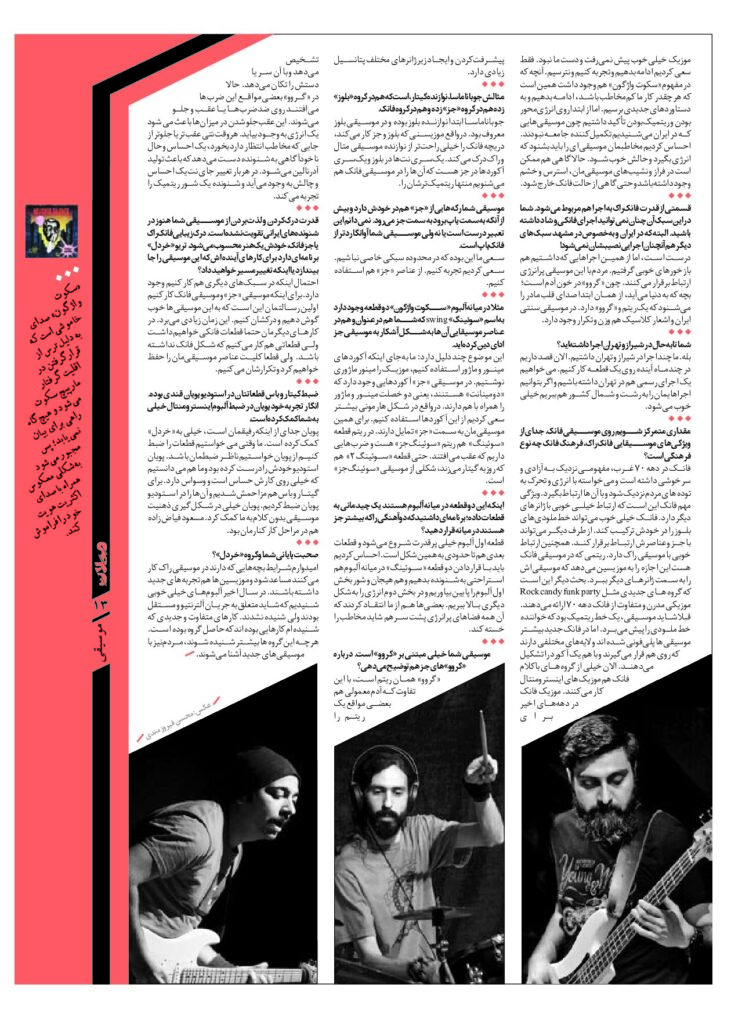
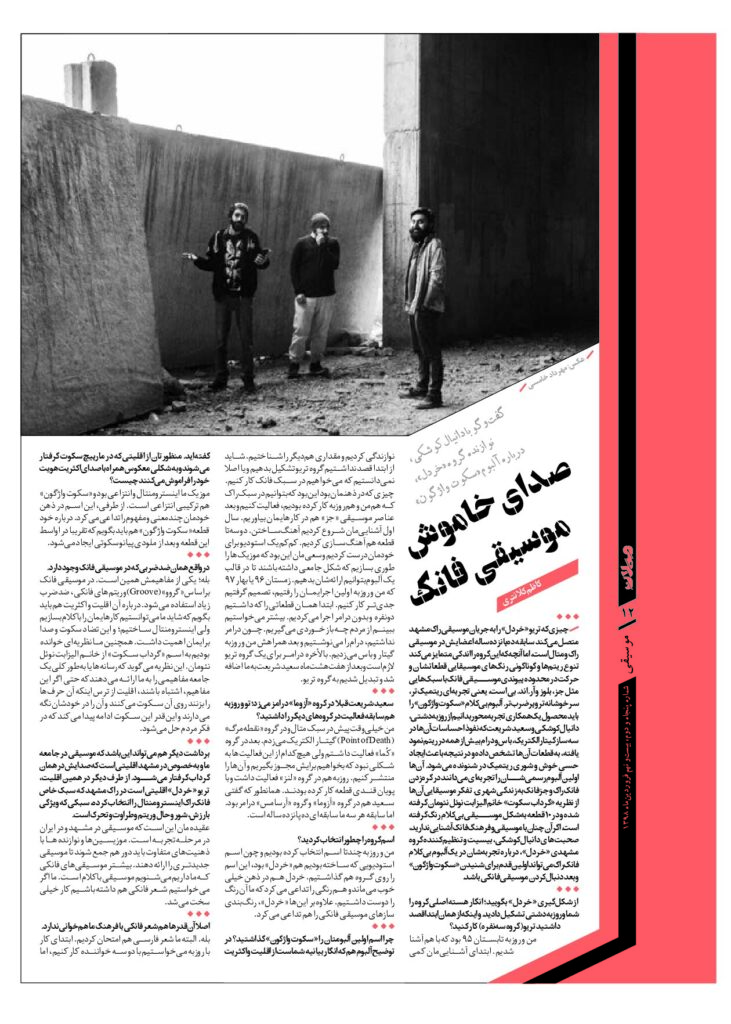
The full interview discusses the formation of Khardal, the background of its
members in Mashhad’s underground rock and metal scene, and the inspiration
behind the instrumental album Reverse Silence.
It highlights how the band drew on Elisabeth Noelle-Neumann’s theory of the
“Spiral of Silence,” translating it into a rhythmic, groove-driven sound that
blends funk, jazz, and urban energy.
Interview with Danial Kooshki, Bassist of Khardal, about the Album Reverse Silence
By Kazem Kalantari – Milan Weekly
What connects the trio Khardal to Mashhad’s rock scene is the 10–15 year history of its members in rock and metal. What distinguishes the group, however, is the diversity of rhythms and the colorful variety of their sound, bridging funk with jazz, blues, and R&B — resulting in a more rhythmic, upbeat, and energetic experience.
The instrumental album Reverse Silence was the product of an experimental collaboration between Roozbeh Dashti, Danial Kooshki, and Saeid Shariat. Their interplay on guitar, bass, and drums is most vividly expressed through rhythm, giving the tracks a strong groove and infectious energy. They consider the album an exploration of urban life through funk rock and jazz funk, drawing conceptual inspiration from Elisabeth Noelle-Neumann’s “Spiral of Silence” theory, expressed in ten instrumental pieces.
“If you are not familiar with funk music and its culture, Danial Kooshki — bassist and arranger of Khardal — offers an introduction through this instrumental funk-rock album, which may serve as your first step into listening to Reverse Silence and, eventually, to following the path of funk itself.”
Formation of Khardal
Kooshki recalls meeting Roozbeh Dashti in the summer of 2016. They began by jamming casually, without a clear plan to form a trio or focus on funk. Their early aim was simply to experiment within rock, with touches of jazz. By 2017 they had written a few tracks, built a small studio, and performed their first shows as a duo, using programmed drums. Within months, drummer Saeid Shariat joined, solidifying the trio.
Each member brought a background in Mashhad’s underground scene: Kooshki had played in Point of Death (metal) and Koma, Dashti had worked with other local musicians such as Pooyan Ghandi, and Shariat had been drummer in Azoma and Arsames. Collectively, they carried nearly fifteen years of experience.
Why Reverse Silence?
The band chose the name “Khardal” after their studio. The word resonated with them, evoking color and energy, much like funk’s sonic palette. Their debut album title, Reverse Silence, reflects both a musical and conceptual choice: the tension between sound and silence, presence and absence. In one track of the same name, a sudden silence after the piano motif embodies this idea.
Philosophically, the title was informed by Noelle-Neumann’s theory of the “Spiral of Silence”: minorities may silence themselves out of fear of standing against majority views, until their silence becomes part of collective thought. For Khardal, choosing an instrumental format — instead of vocal funk with lyrics — symbolized resistance against conformity, embracing abstraction as expression.
Style and Influences
Khardal’s music sits at the intersection of funk rock and jazz funk, enriched with Persian urban energy. They experimented with jazz elements — dominant chords, swing rhythms, syncopation — especially in the two “Swing” tracks placed mid-album as a deliberate contrast, offering listeners a pause between high-energy grooves.
Kooshki emphasizes that groove is central: “It’s in our blood. A baby hears the mother’s heartbeat — a groove — before anything else. In Persian classical poetry, rhythm and repetition serve the same purpose. Funk continues that primal connection.”
On Funk Culture
Beyond rhythm, funk carries cultural meaning: in 1970s America it was associated with freedom, joy, and communal energy. Kooshki sees modern funk — from projects like Rock Candy Funk Party — as polyphonic and genre-crossing, merging with blues, jazz, and rock.
Recording and Production
Much of the recording for bass and guitar was done at Pooyan Ghandi’s studio, with his close guidance. Ghandi’s attention to detail and experience with instrumental projects shaped the final sound. Other collaborators, like Masoud Fayaz Zadeh, contributed at key stages.
Outlook
Kooshki hopes for better opportunities for rock musicians in Iran, particularly in Mashhad where restrictions on live music make progress difficult. He stresses the importance of collective creativity: “The most exciting works I’ve heard recently came from independent groups, even if they didn’t receive wide attention. The more these bands are heard, the more the public will discover new music.”
Footnote (from Milan Weekly)
“Reverse Silence” is the muted voice that, out of fear of being a minority, becomes trapped in the spiral of silence, and eventually — in reverse — aligns itself with the voice of the majority, forgetting its own identity.
👉 Read Full Interview (PDF)